Archives
- 2026-04
- 2026-03
- 2026-02
- 2026-01
- 2025-12
- 2025-11
- 2025-10
- 2025-09
- 2025-03
- 2025-02
- 2025-01
- 2024-12
- 2024-11
- 2024-10
- 2024-09
- 2024-08
- 2024-07
- 2024-06
- 2024-05
- 2024-04
- 2024-03
- 2024-02
- 2024-01
- 2023-12
- 2023-11
- 2023-10
- 2023-09
- 2023-08
- 2023-07
- 2023-06
- 2023-05
- 2023-04
- 2023-03
- 2023-02
- 2023-01
- 2022-12
- 2022-11
- 2022-10
- 2022-09
- 2022-08
- 2022-07
- 2022-06
- 2022-05
- 2022-04
- 2022-03
- 2022-02
- 2022-01
- 2021-12
- 2021-11
- 2021-10
- 2021-09
- 2021-08
- 2021-07
- 2021-06
- 2021-05
- 2021-04
- 2021-03
- 2021-02
- 2021-01
- 2020-12
- 2020-11
- 2020-10
- 2020-09
- 2020-08
- 2020-07
- 2020-06
- 2020-05
- 2020-04
- 2020-03
- 2020-02
- 2020-01
- 2019-12
- 2019-11
- 2019-10
- 2019-09
- 2019-08
- 2019-07
- 2019-06
- 2019-05
- 2019-04
- 2018-11
- 2018-10
- 2018-07
-
Analgesic activity was evaluated by measuring tail flick lat
2022-03-09

Analgesic activity was evaluated by measuring tail flick latencies to the immersion of rat’s tail in water, maintained at ∼51°C [18] after recovery from anesthesia. Typically, rats were immobilized inside a restrainer, leaving only the tail exposed, which was then immersed into the hot water bath, a
-
s3i mg Both anxiety like behavior and sucrose
2022-03-09
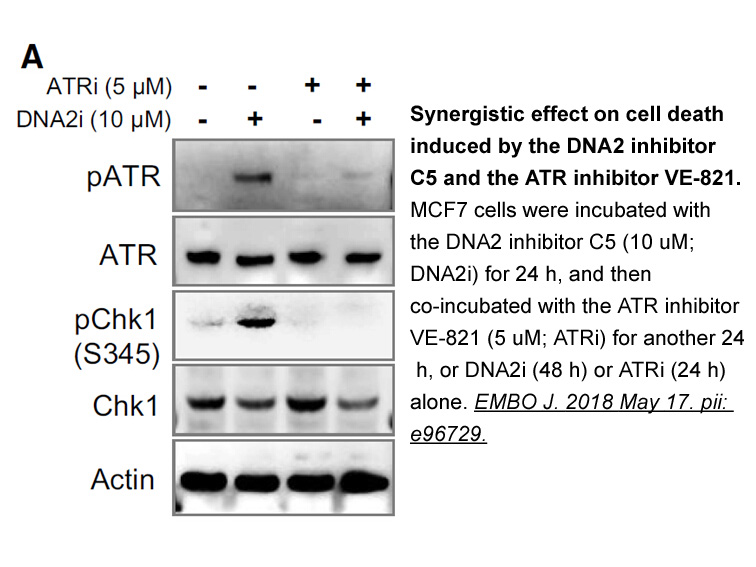
Both anxiety-like behavior and sucrose preference/intake were reduced in GPR40/FFAR1 KO male mice, while social behavior was normal in KO mice. These findings indicate that brain GPR40/FFAR1 is involved in the modulation of anxiety- and depression-like behavior in rodents. Previous studies have demo
-
Apoptosis via Fas FasL system has
2022-03-09
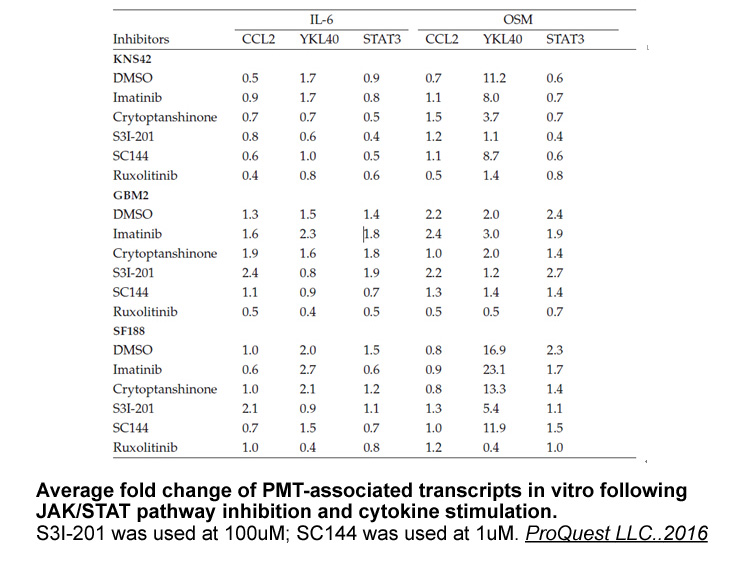
Apoptosis via Fas/FasL system has been evidenced to play a role in the pathogenesis of many diseases [26], [27], [28], [29], [30], [31], [32], [33], [34]. Along with these, Fas/FasL system has an important role in progressive renal disease and organ rejection in renal, cardiac and liver transplanta
-
br Acknowledgments This research was supported by the Nation
2022-03-09
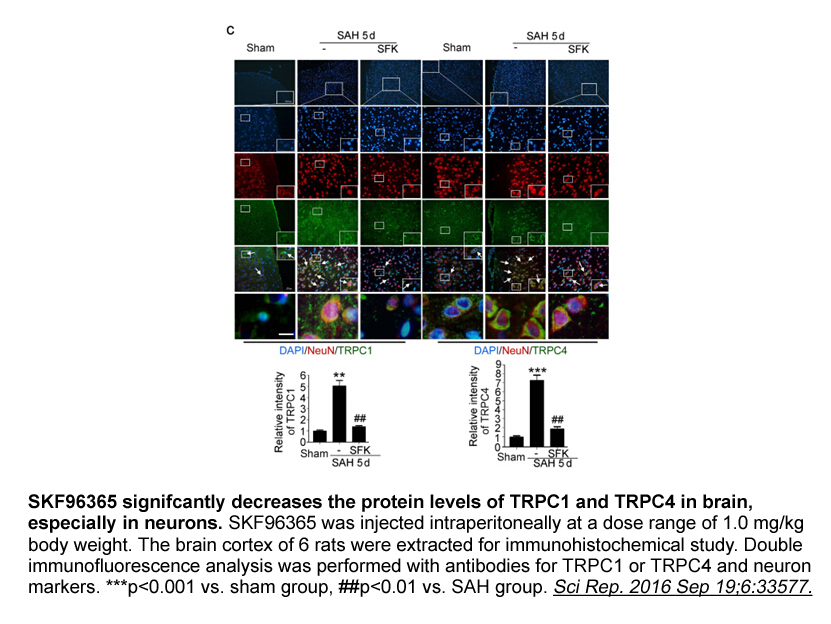
Acknowledgments This research was supported by the National Institutes of Health Grants GM58442 and GM084152, as well as the National Institutes of Health Predoctoral Training Grant 5T32GM008700-13. We thank Eric Oldfield (University of Illinois, Urbana-Champaign) for providing the FDPS inhibitor
-
To interrogate the molecular basis for
2022-03-08
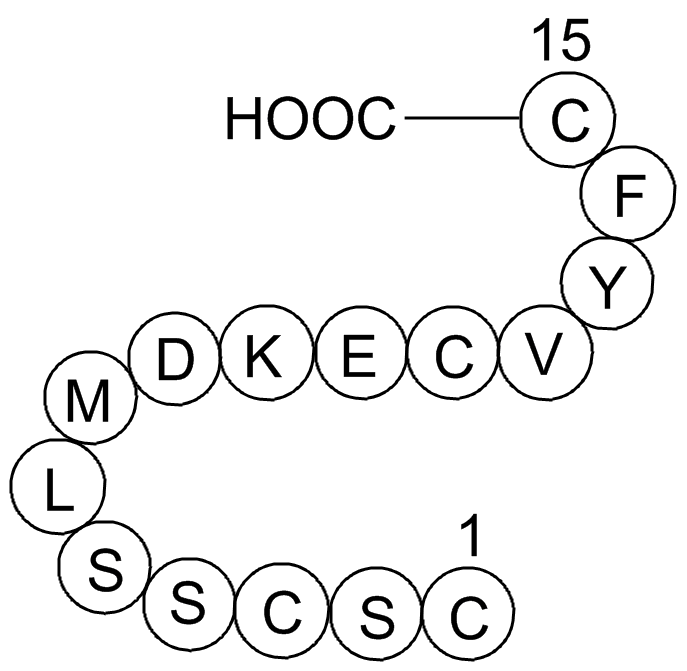
To interrogate the molecular basis for the myocardial phenotype in mutant hearts, we performed quantitative real-time PCR (qRT-PCR) expression analysis of genes encoding critical endocardium-derived molecules including Nrg1 and Efnb2. Nrg1 expression was reduced in E13.5 mutant hearts as compared to
-
br Funding br Conflict of interest statement br References
2022-03-08
Funding Conflict of interest statement References and recommended reading Papers of particular interest, published within the period of review, have been highlighted as: Acknowledgements Introduction Recent papers have shown that Interferon-free hepatitis C virus (HCV) therapies with
-
br For some time it was known that membrane bound
2022-03-08
For some time, it was known that membrane-bound guanylate cyclases (GCs) of photoreceptor Ertapenem sodium salt in the retina respond to changes in the [Ca]. Lolley and Racz observed that synthesis of cyclic GMP (cGMP) was stimulated at only low [Ca], concluding that Ca has an inhibitory effect on
-
br Materials and methods br Results br Discussion Although
2022-03-08
Materials and methods Results Discussion Although there is general agreement that GPR109A has anti-lipolytic activity and that the NEFA reduction in response to nicotinic ARM1 mg is mediated by GPR109A, whether GPR109A activation has any impact on plasma TG levels is unclear. Since the phe
-
KU-0060648 receptor GPR shares a amino acid
2022-03-08
GPR81 shares a 52% amino KU-0060648 receptor sequence identity in humans to GPR109A [1], [2], [3]. In addition, GPR81 is localized more specifically to the adipose tissue [3]. In 2008, lactate was discovered to be the endogenous ligand for GPR81 [9], [10]. Plasma lactate levels reach concentrations
-
Selection of the month br Fibrosis br Liver
2022-03-08
Selection of the month Fibrosis Liver protection device Non-alcoholic steatohepatitis Genetic metabolic liver disease Hepatitis C virus (HCV) infection Hepatitis B virus (HBV) infection Cirrhosis Regeneration Introduction Upon catalysis by hepatic and bacterial enzymes, c
-
We next compared the enhancing effects of nM zinc on
2022-03-08
We next compared the enhancing effects of 100nM zinc on currents produced by a low concentration of glycine with zinc effects on the same currents produced by the partial agonist taurine. In this experiment, zinc was co-applied with concentrations of glycine or taurine producing 5–10% of the maximal
-
ICH induced striatal lesion produced
2022-03-08

ICH-induced striatal lesion produced a reduction of EAAT1 expression analogous to the decreased glutamate uptake at 6 h. The combined reduction of excitatory amino GSK461364 transporters and of glutamate uptake activity might explain the well-known glutamate excitotoxicity following brain ischemia (
-
OCA has recently been approved for the treatment of
2022-03-07
OCA has recently been approved for the treatment of patients with PBC and is under study for diseases such as NASH, PSC and biliary atresia [30], [49]. Up to now, the beneficial effects of OCA have been related to its anti-cholestatic, anti-inflammatory and anti-fibrotic properties. We have here rep
-
Amodiaquine dihydrochloride dihydrate In conclusion a novel
2022-03-07
In conclusion, a novel series of GPR40 agonists containing nitrogen heterocyclic rings derived from TAK-875 were designed and synthesized. The structural activity relationship studies indicated that the substituents on the nitrogen Amodiaquine dihydrochloride dihydrate had a remarkable effect on the
-
Andexanet alfa works as a decoy for the FXa inhibitor
2022-03-07
Andexanet alfa works as a decoy for the FXa inhibitor to bind to irreversibly. The recently completed ANDEXA-4 trial, which was a prospective, open-label, single group study, found that patients achieved good or excellent hemostasis in 82% of subjects [, , ]. There was an overall 10% thromboembolic
16330 records 500/1089 page Previous Next First page 上5页 496497498499500 下5页 Last page